Every fleet manager knows that keeping trucks on the road is the only way to protect profit margins.
We have witnessed how unexpected downtime can bleed a local business dry. Recent industry data shows average downtime costs hitting anywhere from $448 to $760 per day for a single commercial vehicle.
That lost revenue is exactly why finding the most efficient maintenance strategy is critical for your bottom line. We will break down the mobile fleet vs shop drop off debate so you can see fleet detailing solutions that fit your specific needs.
Let’s examine exactly when mobile service makes sense, when a traditional shop drop-off is better, and how a hybrid model might be the smartest choice.
When mobile wins
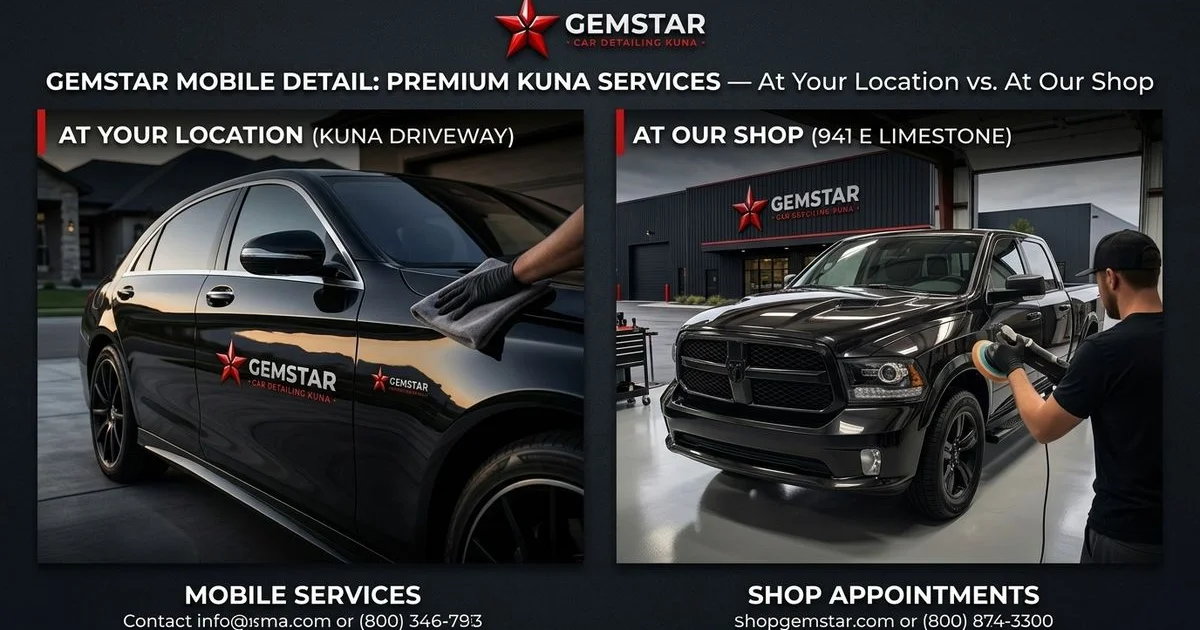
Mobile service eliminates the need to shuttle vehicles across town. It keeps your trucks actively generating revenue during business hours.
We typically recommend this approach for daytime fleets, traveling sales units, and operations with distributed yards.
- Daytime fleet: Trucks remain in the field during business hours.
- Distributed yards: Servicing across multiple parking locations saves coordination time.
- Active job sites: Mechanics address service vehicles while they are in use throughout the day.
- No facility: Real estate teams and regional managers get support without a central garage.
- Volume blitz: You get rapid processing for six or more vehicles in one location.
This setup is highly effective for reducing the $448 to $760 daily downtime penalty associated with sidelined commercial vehicles. Telematics tools and GPS tracking platforms like Trak-4 show that even a one-percent drop in utilization represents over three lost working days per vehicle annually.
Our mobile technicians bring the service directly to your location to prevent these massive financial leaks.
When shop drop-off wins
Shop drop-off is the clear winner for complex restorations and specialized treatments. You gain access to the controlled environments necessary for multi-stage procedures.
We rely on dedicated facilities for jobs that require strict climate control or extended curing times. A traditional shop environment provides the heavy-duty equipment and stable conditions needed for intensive detailing.
- Pre-sale recon: Dealerships benefit from batch processing multiple cars simultaneously.
- Multi-day work: Paint correction and ceramic coating applications require 24 to 48 hours of indoor curing.
- Bodywork-adjacent: Vehicles needing collision repair alongside detailing require specialized bays.
- Driver availability: Operations with built-in downtime windows can easily schedule drop-offs without losing revenue.
Independent repair shops across the US average between $120 and $159 per hour for labor in 2026. Many fleet managers utilize drop-off services for annual overhauls while keeping standard maintenance mobile.
Our facility partnerships ensure you get specialized care for complex jobs without overpaying for premium dealership rates.
Hybrid approach
Most modern operations eventually adopt a hybrid maintenance strategy to balance convenience and comprehensive care. This blended model maximizes vehicle uptime while ensuring major aesthetic or mechanical issues receive proper attention.
Our clients frequently combine rapid mobile visits with scheduled facility drop-offs to optimize their budget. The US fleet maintenance market is expanding rapidly, and businesses are moving toward this flexible strategy to manage expenses.
- Daily or weekly maintenance: Mobile Express and Signature tiers keep the fleet presentable without interrupting routes.
- Quarterly deep cleaning: Shop drop-offs handle the Premium tier requirements with extended interior extraction and exterior work.
- Annual restoration: Dedicated facilities manage heavy paint correction and ceramic applications safely.
This strategic split reduces your vulnerability to unplanned breakdowns. Preventive care managed through fleet reporting software like MaintainX helps track these mixed-service intervals perfectly.
We have noticed that companies utilizing a hybrid schedule report significantly fewer emergency repairs.
What mobile setup requires
Preparing for a mobile detailing visit requires very little effort on your end. The primary goal is securing safe access to the vehicles during their natural downtime.
Our mobile units arrive fully equipped with onboard water tanks and independent generators. This self-contained setup means technicians never drain your site utilities during the process.
- Truck access: Securing direct entry to the customer site or fleet yard is mandatory.
- Reasonable parking: Technicians can navigate cramped lots, but allowing ten feet of clearance improves speed.
- Self-contained utilities: Mobile vans supply their own power and spot-free water systems.
- Time windows: A standard exterior and interior refresh requires a 60 to 90-minute window per vehicle.
Providing a designated staging area helps technicians move swiftly from one truck to the next. Adhering to these simple requirements ensures your fleet maintains strict visual and safety standards.
Our crews work efficiently to keep your vehicles looking professional without disrupting your daily operations.
What shop drop-off requires
Coordinating a shop drop-off demands deliberate scheduling and clear communication with your logistics team. You must account for the operational impact of removing a vehicle from active duty.
Our scheduling coordinators always recommend planning facility visits during your naturally slow periods. This proactive scheduling minimizes the sting of driver downtime and keeps your core operations running smoothly.
- Driver logistics: You must assign personnel to deliver the vehicle and arrange a return pickup.
- Time commitment: Expect a minimum of a half-day loss, extending to multiple days for intensive restoration work.
- Operational alignment: The service must be booked around route schedules using active fleet management software.
Factoring in the cost of a driver shuttling the vehicle is an important step in the planning phase. Using fleet management tools like Geotab or Verizon Connect helps pinpoint the exact hours a truck is idle.
We see many fleet managers use this data to book drop-off appointments without disrupting customer deliveries.
Cost difference: mobile fleet vs shop drop off
The direct service packages cost the exact same whether you choose mobile or drop-off. The real financial difference lies in the hidden costs of vehicle movement and lost productivity.
We evaluate the total cost of downtime by looking at local labor rates and operational delays. Industry data from RTS Financial shows the average operating cost for a heavy-duty commercial truck hit $91.27 per hour recently.
Direct Maintenance Costs
The invoice for the actual detailing work remains consistent across both delivery methods. Flat-rate pricing keeps your budgeting straightforward and predictable.
We price the Express, Signature, and Premium tiers identically to guarantee transparency.
The Hidden Price of Shuttling
Sending a driver to a shop involves paying their hourly wage for non-revenue-generating transit. A typical commercial driver earns between $20 and $30 per hour, which adds up quickly during a round-trip shuttle.
Our mobile service completely eliminates this wasted payroll expense.
Opportunity Costs
Every hour a truck sits at a facility is an hour it cannot serve your customers. Losing a vehicle for a full business day can cost hundreds of dollars in missed revenue opportunities.
We consistently remind operators that mobile service protects your daily earning potential by working precisely when the truck is already scheduled to be idle.
Real fleet examples
Seeing how other local businesses structure their maintenance can help you solidify your own strategy. You can easily adapt these proven models to fit your specific fleet size and daily schedule.
Our portfolio includes a wide variety of industries, each dealing with unique logistical hurdles. Industry leaders use these exact blueprints to balance their maintenance needs while protecting their profit margins.
| Business Type | Fleet Size | Maintenance Strategy | Service Delivery Method | Key Operational Benefit |
|---|---|---|---|---|
| HVAC Contractor | 6 Trucks | Bi-weekly Express, Quarterly Premium | 100% Mobile | Prevents an estimated $450 daily downtime loss per truck. |
| Real Estate Brokerage | 8 Vehicles | Monthly Signature Blitz Day | 100% Mobile | Keeps agents on the road showing properties. |
| Auto Dealership | 40+ Vehicles | Weekly Express + Pre-sale Premium | Hybrid | Speeds up inventory turnover and batch processing. |
| Property Manager | 4 Vehicles | Monthly Signature | 100% Mobile | Eliminates the need to hire dedicated transport staff. |
Reviewing these examples highlights a clear trend favoring mobile-first solutions for daily operations. Finding the right mix heavily depends on your tolerance for vehicle downtime and access to a dedicated facility.
Our hybrid model remains the top choice for businesses juggling massive inventories, like high-volume auto dealerships.
Deciding on the mobile fleet vs shop drop off debate comes down to protecting your daily revenue.
Mobile maintenance is clearly the most efficient choice for keeping your trucks active. Our team is ready to help you implement a hybrid strategy that fits your schedule perfectly.
Reach out today to discuss a custom maintenance plan that eliminates unnecessary downtime.