You know how quickly a brand-new fleet truck or daily commuter loses that showroom shine after a few months on the road. We see it every day in the shop.
Modern factory clear coats are thinner than ever, making them highly vulnerable to UV rays, bird droppings, and rock chips.
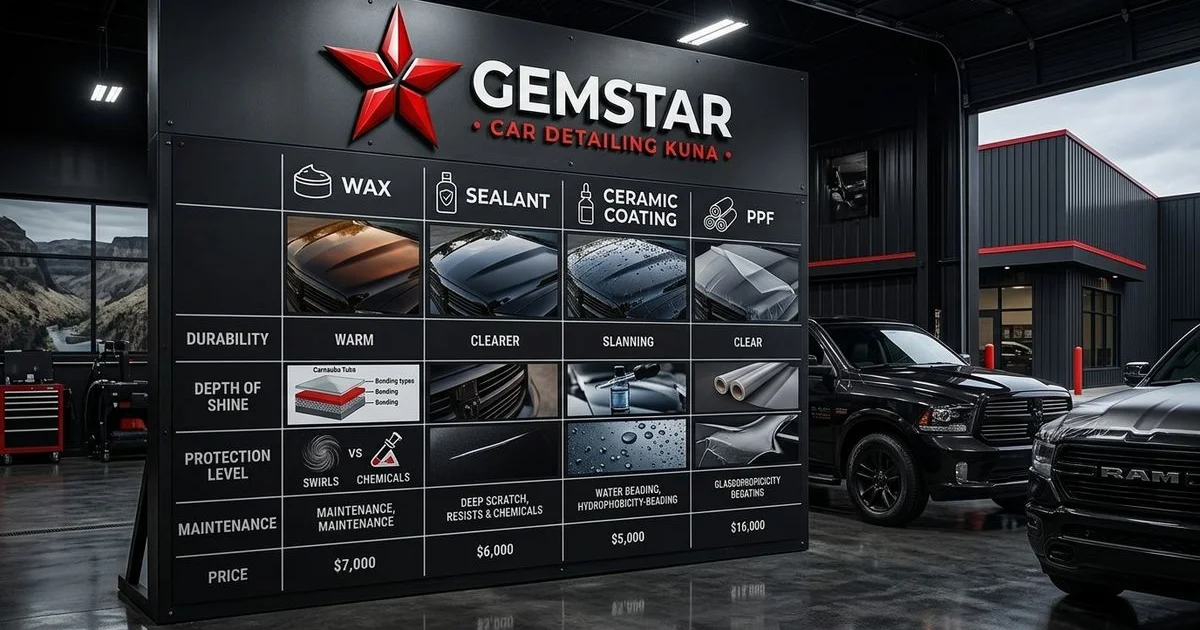
Let’s look at the data on the four most common paint protection methods, specifically ceramic coating vs wax vs sealant vs ppf, and break down exactly what they cost in 2026. We will walk through the specific use cases for each option so you can make the smartest choice for your vehicles.
Wax (carnauba or synthetic)
Wax is a short-term, sacrificial layer that sits on top of your clear coat to provide a classic, warm glow. It is the cheapest option upfront, but it requires frequent reapplication to maintain any real defense.
Our team often recommends wax for showroom prep rather than daily driving. Heat and harsh detergents strip these products away quickly. We break down the core specs for traditional wax below.
- Lifespan: 4-8 weeks (up to 3-4 months for modern hybrids like Meguiar’s Ultimate Liquid Wax)
- Cost: $18-$25 for DIY products, or $150-$300 for a professional application
- Pros: Cheap, easy DIY, produces a classic deep gloss
- Cons: Short-lived, breaks down rapidly in UV heat, offers zero chemical resistance
Best for: Show car prep, short-term protection, or layered over other systems. A quick application works well if you are selling a company vehicle and want a temporary shine.
Sealant (synthetic polymer)
A paint sealant is a synthetic polymer designed to mimic wax while offering significantly longer durability. It provides excellent seasonal defense against road salt and winter weather.
We apply these synthetic formulas to many commercial fleets because they strike a great balance between cost and longevity. The polymers bond directly to the paint pores to block out moisture. Key details for synthetic sealants include:
- Lifespan: 6-12 months
- Cost: $50-$200 as a DIY kit or a professional detailing add-on
- Pros: Better UV and salt resistance than wax, much easier maintenance
- Cons: Still relatively short-lived compared to advanced coatings, provides no hardness benefit
Best for: Mid-term protection, leased vehicles, or business trucks between major detailing appointments.
Ceramic Coating (SiO2)
Ceramic coating is a liquid polymer containing silicon dioxide (SiO2) that chemically bonds to your factory clear coat. It creates a semi-permanent, hydrophobic shield that makes washing incredibly easy. Our shop treats countless daily drivers with this solution to lock in a deep gloss for years.
Professional-grade formulas feature 85% to 90% SiO2 concentrations, curing to a 9H hardness level that resists chemical etching from bird droppings. A $1,500 ceramic package that lasts five years only costs about $300 annually, making it cheaper over time than quarterly waxing.
We see excellent return on investment for owners who want a low-maintenance exterior. Here are the standard specifications:
- Lifespan: 1-9 years (tiered based on formula and layering)
- Cost: $900-$2500 for a professional 2026 application
- Pros: Multi-year protection, high chemical resistance, 9H hardness, extreme hydrophobic properties
- Cons: Higher upfront cost, requires extensive paint correction and prep, multi-day drop-off recommended
Best for: Long-term ownership, maximum chemical protection, and paint preservation for personal or company vehicles.
PPF (Paint Protection Film)
Paint Protection Film (PPF) is a thick, transparent urethane layer applied over your body panels to absorb physical impacts. It is the only product on the market that actively prevents rock chips and deep scratches.
We install this heavy-duty barrier on vulnerable areas to stop expensive sandblasting damage. A quality film is typically 8 mils thick and utilizes thermoplastic polyurethane (TPU) that self-heals minor swirl marks when exposed to heat.
Replacing a single front bumper or hood at a body shop easily runs $1,000 to $2,000 per panel today. Our clients save thousands in long-term repair bills by wrapping the high-impact zones early. The breakdown for modern PPF:
- Lifespan: 7-10 years
- Cost: $1500-$3500 for full front coverage, or $5000-$8000+ for the entire vehicle
- Pros: True physical impact protection against rock chips, self-healing capabilities, preserves OEM paint
- Cons: Most expensive option, visible film edges on partial installs, strict professional installation required
Best for: High-value vehicles, rock-chip-prone highway driving, and complete physical protection.
Stacking
Stacking involves installing Paint Protection Film first and then applying a ceramic coating directly over the film. This combination delivers the physical armor of PPF along with the extreme chemical resistance of a ceramic layer. PPF stops the rock chips, while the coating stops the water spots and UV fading.
High-end builds almost always utilize this dual-layer strategy for total peace of mind. We don’t do PPF in-house, but we do ceramic over PPF for clients combining both. Treating a wrapped car with SiO2 polymers extends the life of the urethane and prevents the plastic from yellowing over time.
Bottom line
Most Kuna keepers should land on a multi-year ceramic coating for daily driving. When comparing ceramic coating vs wax vs sealant vs ppf, wax-only is simply under-protection for a modern clear coat. A synthetic sealant works perfectly fine for short-term ownership or budget-friendly fleet maintenance.
PPF is an incredible product, but a full-body wrap is often overkill for standard commuting use cases. If you want to keep your paint looking immaculate without spending every weekend washing it, invest in a quality SiO2 package.
We recommend assessing your typical driving environment and budget before committing to any single method. Contact your local detailing professional to get an exact quote based on your vehicle’s specific clear coat condition.