We regularly evaluate what makes a ceramic coating rv worth it for our clients, especially since 2026 professional applications cost between $1,499 and $4,000 in the US. That premium price tag requires a clear justification based on your ownership timeline and the rig’s current condition. The exact value you extract from the service depends heavily on those two factors.
Our team has tracked the financial impact of these protective layers over several years. The data proves that preventing UV damage saves thousands of dollars in depreciation. Let’s examine the specific conditions where this application makes financial sense, run the cost-benefit math, and outline the exact questions to ask a detailer before booking.
When ceramic is worth it
We consider ceramic coating highly beneficial if you plan to keep your RV for more than five years and store it outdoors. This long-term ownership horizon allows you to maximize the return on the initial application cost. Newer motorhomes in their first three years of life are the best candidates.
Our analysis points to several specific scenarios where this protective barrier proves its worth. Applying a titanium dioxide and SiO2 base coat early prevents oxidation, which saves you from $700 or more in multi-step paint correction fees later. The investment makes complete sense under the following conditions:
- Constant Outdoor Storage: We see tremendous value for rigs stored outdoors, as the coating reflects harsh UV rays to prevent chalky oxidation.
- Low-Maintenance Preference: The hydrophobic surface repels road grime effortlessly, meaning you can reduce your washing frequency.
- Premium Asset Protection: A protected exterior actively fights the standard 10% annual depreciation rate common in the US market.
Our data shows that high-grade products carry specific multi-year warranties to ensure this long-term performance. You gain peace of mind knowing the gel coat is secured against the elements. The upfront cost quickly translates into measurable value over the lifespan of the vehicle.
When ceramic is not worth it
We do not recommend this expensive service if you plan to sell the rig within the next two years or store it indoors year-round. Short-term owners will simply not recover the initial $2,000 to $4,000 investment at the time of sale. Rigs kept in climate-controlled, enclosed storage facilities already avoid the damaging UV stress that causes fading.
Our technicians often turn away heavily oxidized motorhomes unless the owner agrees to a comprehensive paint correction first. A two-step or three-step paint correction process easily adds $500 to $700 to the total bill, making the project highly expensive for older units. The coating will only lock in the existing damage if applied over a chalky surface.
We suggest looking at alternative options in a few specific situations. Consider skipping the heavy-duty application under these circumstances:
- Low-Mileage Seasonal Use: A standard polymer sealant provides sufficient protection for short summer trips.
- Imminent Sale: Our market research shows that buyers rarely pay a full premium just because a rig has a specialized nano-coating.
- Strict Budget Limits: Choosing routine wash and wax services remains a viable alternative for budget-conscious owners.
A well-maintained sealant still protects against minor environmental contaminants.
Cost vs benefit math: Is a ceramic coating rv worth it?
Traditional Maintenance Expenses
We always run the raw numbers to show exactly how a professional application compares to traditional maintenance over a three-year period. The math reveals that the upfront premium balances out through reduced ongoing care expenses. Let’s compare the costs for a standard 35-foot motorhome over thirty-six months.
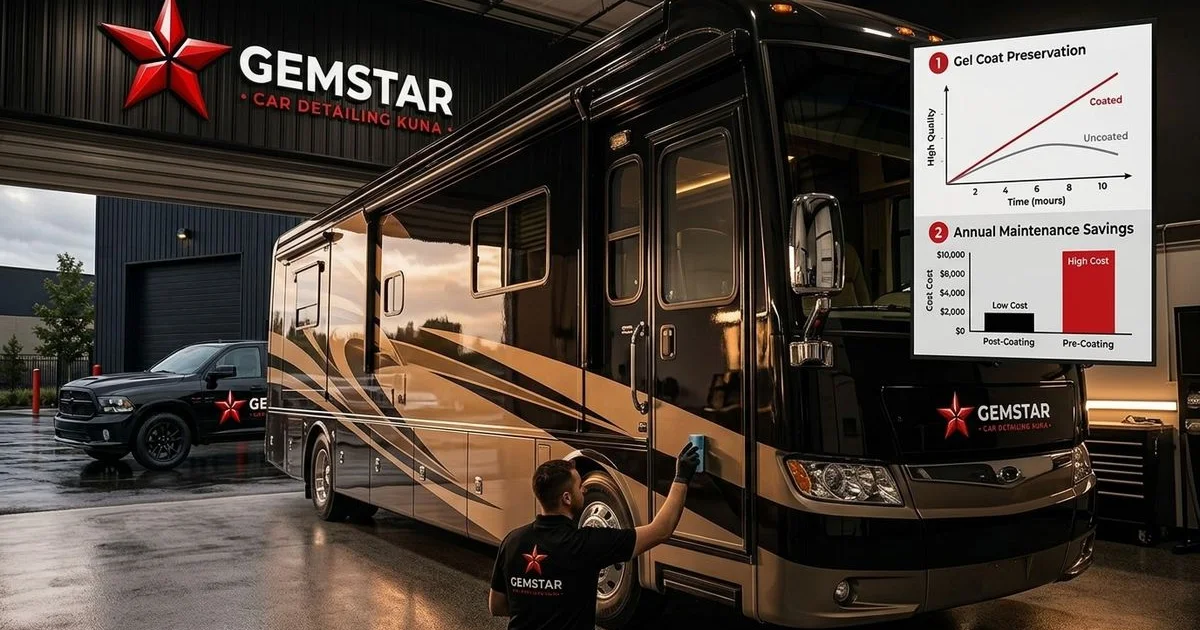
Our typical client spends roughly $2,600 on traditional upkeep over a three-year cycle. Six standard wash and wax services at $300 each total $1,800. One mid-cycle gel coat restoration adds another $800 to the running total.
The Ceramic Financial Curve
We see a different financial curve when utilizing advanced nanotechnology. The initial application from a high-end detailer runs between $2,000 and $4,000. Three simple maintenance washes at $200 each add just $600 more.
Our comparison table clearly illustrates the financial breakdown over three years.
| Expense Category | Traditional Maintenance | Ceramic Coating |
|---|---|---|
| Initial Application | $0 | $2,000 - $4,000 |
| Wash & Wax Services | $1,800 (6 visits) | $600 (3 simple washes) |
| Mid-Cycle Restoration | $800 | $0 |
| Total 3-Year Cost | $2,600 | $2,600 - $4,600 |
The three-year horizon shows a near break-even point or a slight premium. The real financial advantage appears when you extend the timeline out to six years.
We find that the coated vehicle completely bypasses the need for a $1,500 full oxidation removal in year five. This long-term durability makes the initial investment highly cost-effective. The rig also maintains a superior, glossy appearance during every single camping trip.
Resale value impact
Our experience in the US market confirms that documented exterior protection significantly boosts resale pricing. A verified application on a rig’s history report immediately signals to buyers that the asset was treated with respect. Detailed maintenance records lift the final sale price by 5% to 15%, depending on the specific make and model.
We particularly like that top-tier products like System X Max automatically register the service with CARFAX. This official documentation removes any doubt during negotiations.
Pro Tip: A 5% value retention on a $100,000 motorhome equates to a $5,000 premium at trade-in, effectively paying for the initial service.
Our ongoing market analysis shows that this premium easily covers the original cost of the protective service. New RVs naturally lose 20% to 30% of their value in the very first year alone. Slowing down that depreciation curve through immaculate exterior care is a highly effective financial strategy.
Marine ceramic specifics
We strongly advise against using standard automotive formulas on a fiberglass motorhome. An RV requires a marine-grade or dedicated recreational vehicle product to survive extreme conditions. Gel coat surfaces are significantly more porous than the painted aluminum or steel found on passenger cars.
Our application specialists rely on specialized formulations, such as Glidecoat RV, to bridge this material gap. These heavy-duty liquids contain unique nano-ceramic particles designed specifically to fill those larger microscopic pores. The chemical bond formed by a marine-specific product handles intense water exposure and constant rain far better than car products.
We ensure that the chosen product offers the following critical advantages:
- Deep Pore Bonding: The heavy-duty formula penetrates the porous gel coat, creating a structural anchor that standard car waxes cannot achieve.
- Concentrated UV Shielding: The elevated inhibitor content reflects destructive radiation away from the fiberglass.
- Warranty Backing: Our preferred marine-grade applications provide a reliable multi-year warranty, usually lasting two to five years.
What to ask before booking
Booking a $3,000 exterior service requires careful vetting of the detailing shop. A reputable technician will gladly walk you through their exact workflow and chemical choices. We recommend asking four specific questions before handing over your keys.
Use this checklist to evaluate the service provider:
- Is the product marine-specific? Confirm they are not just applying a standard car formula to your porous gel coat.
- Will you perform full paint correction? Our industry standards dictate that all oxidation must be mechanically removed before applying the chemical layer.
- What are the exact warranty terms? Ask if the warranty covers three years or five years, and clarify if the product carries an SGS-tested 9H hardness rating.
- What is the required maintenance schedule? Many brands void the warranty if you fail to perform annual inspections or specific maintenance washes.
We always provide our clients with a clear, written upkeep plan to ensure their investment remains protected. Following a professional maintenance guide guarantees that the hydrophobic properties last for years. You can explore more tips and see exactly what makes a ceramic coating rv worth it in our comprehensive guide to RV detailing.