We often see the frustrating results of UV exposure on aging RVs. This rv gel coat oxidation is a common issue for many owners across the US.
The gel coat on your motorhome is significantly more porous than standard automotive clear coat. Our experience shows this difference in chemistry means UV rays break it down much faster. Prolonged outdoor storage only speeds up the degradation process.
Here is the data behind why this happens, along with the exact steps to restore that factory shine.
What gel coat is
Gel coat is the durable, porous outer layer of your RV’s fiberglass exterior. We often explain it as a protective polymer shell that is much thicker but far more porous than standard car paint.
The average automotive clear coat is typically 1.5 to 2 mils thick. Our team regularly works with gel coats measuring between 18 and 25 mils thick. This extra thickness provides excellent impact resistance against road debris.
- Polyester resin base: This provides the main structural shell of the finish.
- UV inhibitors: These chemicals fight off the sun, but they degrade over time.
- Color pigments: These give your rig its bright white or colored appearance.
Without proper care, oxygen naturally occurring in the air reacts with these molecules. We find the material is extremely UV-sensitive compared to standard automotive paints. The chemistry here requires a completely different maintenance approach.
How RV gel coat oxidation progresses
Oxidation is the gradual breakdown of the surface caused by exposure to oxygen, UV rays, and heat. Our timeline usually begins with minor dulling around year three and ends with heavy chalking by year seven.
You will notice a white, powdery residue rubbing off on your hands. We see this degradation happen roughly 25% faster in high UV index areas like the Sunbelt compared to northern climates. The large surface area of a motorhome absorbs a massive amount of solar radiation.
| Age of RV | Condition of Finish |
|---|---|
| Year 1-3 | Glossy, factory finish with strong UV resistance. |
| Year 3-5 | Slight dulling on sun-exposed sides. |
| Year 5-7 | Visible chalkiness on horizontal surfaces and front caps. |
| Year 7+ | Heavy oxidation, color fade, and a rough white surface. |
Many owners make the mistake of using traditional carnauba waxes to protect their rigs. We warn clients that these organic products simply melt off in weeks under the hot Texas or Florida sun. This leaves the exterior completely unprotected for the rest of the year.
Restoration tiers
The restoration process depends entirely on the severity of the damage. We categorize our services into three distinct tiers to match your specific needs.
US market data from 2026 shows basic exterior detailing runs about $10 to $20 per linear foot. Our full restoration packages for heavy oxidation average between $30 and $60 per foot. Choosing the right tier saves you time and money.
Wash and Wax Maintenance
This entry-level option focuses on preservation and works best on rigs up to five years old. We use this service to remove very light oxidation and apply a standard marine sealant.
Expect to pay $299 or more for this basic maintenance grade protection. It acts as a great preventative measure before the UV damage sets in deep.
Heavy Restoration
Moderate to heavy oxidation requires a much more aggressive approach. Our process involves a heavy cutting compound, a fine polish, and a durable marine sealant.
This tier targets models in the 5 to 10-year range with visible chalkiness. Prices typically start at $799 and scale up based on the length of the trailer.
The heavy restoration process includes:
- Thorough washing and chemical decontamination.
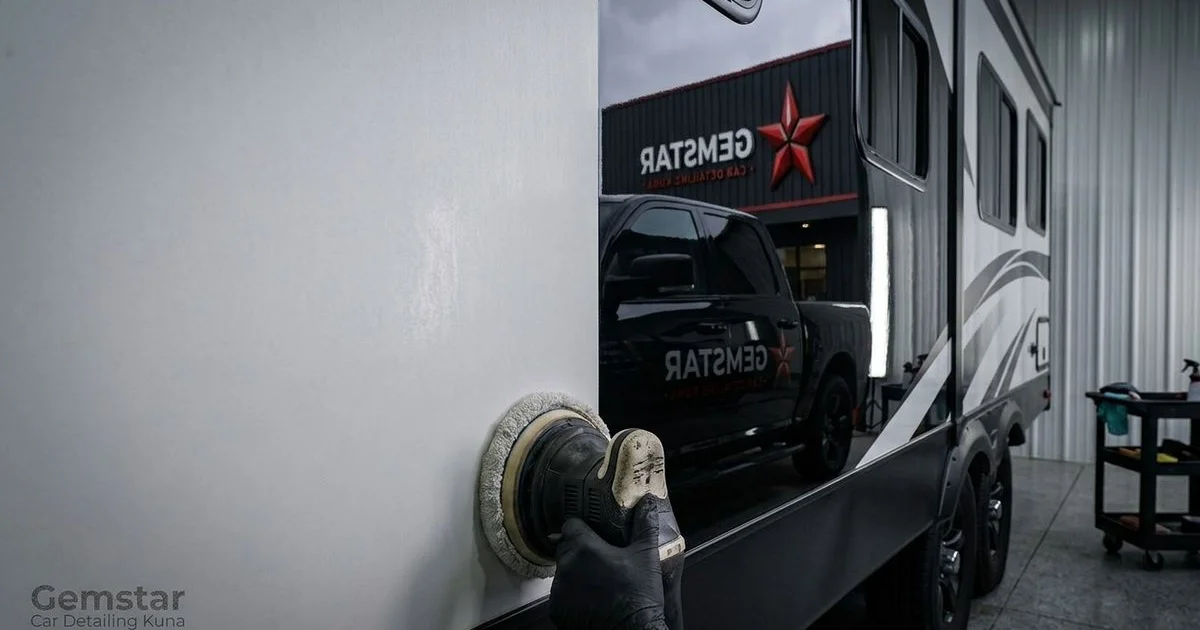
- High-speed rotary compounding to remove dead gel coat.
- Dual-action finishing polish to restore clarity.
Marine Ceramic Coating
This is the premier multi-year UV protection applied after a full restoration. We apply this liquid polymer to chemically bond with the gel coat and dramatically slow future oxidation.
Top-tier professional packages using brands like System X MAX can cost $1,499 or more. The upfront cost is higher, but the long-term defense is unmatched.
What we use
The right tools and chemicals dictate the success of any surface correction. Our team relies on aggressive marine-specific compounds and specialized pads to cut through the damaged layers.
Standard automotive polishes simply lack the cutting power required for this dense material. We typically reach for products like Meguiar’s M49 Heavy Duty Oxidation Remover to strip away the dead layer. A rotary polisher paired with a heavy-cut wool pad removes deep chalkiness incredibly fast.
- Marine-specific compounds: These feature a completely different cut profile than car polish.
- Wool cutting pads: We avoid soft foam pads for compounding because they generate too much heat on fiberglass.
- Decal-safe techniques: Modern trailers feature extensive vinyl graphics that require delicate handling.
- Marine-grade protection: We finish with UV sealants for months of protection or ceramics for years of coverage.
Following the heavy compounding, a dual-action polisher restores the final mirror gloss. We always use a microfiber pad for this final polishing stage to avoid burning the porous material. The pad choice makes a massive difference in the final result.
Prevention
The most effective way to stop oxidation is to block UV rays entirely and keep the surface sealed. We strongly recommend storing your rig under an ADCO cover or a metal carport.
Physical shade halts direct sun damage completely while parked. Our regular maintenance schedule includes washing the exterior after every single trip. Removing bug splatter and road grime prevents acidic compounds from etching the finish.
- Cover when not in use: Invest in a dedicated RV cover or park under a solid structure.
- Wash after every trip: Remove contaminants before they bond to the pores.
- Apply marine wax twice yearly: This replenishes the sacrificial layer of UV protection.
- Use SiO2 spray sealants: A quick silica-infused spray detailer adds fast chemical protection.
For those wanting a hands-off approach, investing in a marine ceramic coating provides multi-year defense. We highly suggest using a quality silica-infused ceramic spray detailer as a maintenance tool.
Spraying this on while drying the vehicle adds a fast layer of chemical protection. You will notice the water beading up immediately.
When oxidation is past restoration
Severe degradation that exposes the underlying fiberglass substrate requires professional repainting, not just detailing. We refer these extreme cases to specialty fiberglass refinishers because the protective shell has failed.
The surface will show a distinct, permanent color change down to the raw material. Signs your rig needs a body shop instead of a detailer include:
- Visible fiberglass hairs or texture showing through the surface.
- Complete delamination of the clear protective layer.
- Damage reaching down to the Crane Composites Filon siding.
Our detailing tools cannot replace missing material or fix structural issues. A full respray can cost tens of thousands of dollars, making routine maintenance incredibly valuable. We encourage owners to address rv gel coat oxidation early while standard correction techniques are still highly effective.