You likely know the frustration of trying to eliminate car odor when a vehicle smells like a damp ashtray or a wet dog. Most car odors come from biological residue bonded directly to fabric and headliner surfaces. Spraying a cheap air freshener over the problem simply masks the smell temporarily instead of fixing the root cause.
This superficial approach actually leaves harmful particulates in the cabin.
Our team sees this all the time with fleet vehicles and personal cars. Recent 2026 data shows that stubborn interior smells, especially tobacco, can reduce a vehicle’s resale value by up to 30 percent in the US market. That financial hit makes real odor removal a necessity.
We will break down the three primary sources of these persistent smells. Then, you can see the exact extraction and ozone methods required to permanently reset a vehicle’s interior.
Three odor sources
The three primary offenders for persistent car odors are smoke, pet residue, and spoiled food. These biological sources embed deeply into porous cabin materials and require different chemical approaches to neutralize.
Smoke and Nicotine
Tar and nicotine residue permanently bonds to the fabric and the HVAC system. You will usually find the highest concentration living in the headliner, the air vents, and the A/C evaporator. This creates what researchers call “third-hand smoke.”
Studies from 2024 indicate that surface nicotine levels in smoker cars average 80 times higher than in smoke-free vehicles.
Pet Dander and Urine
Dogs and cats leave behind a potent mix of urine, dander, and fur oils. The worst accumulation typically happens in the rear bench fabric and the headliner if large dogs ride upright in the back seat. Animal urine contains uric acid crystals.
These crystals embed into the seat padding. They reactivate and emit ammonia gas every time the interior gets warm or humid.
Spilled Food and Dairy
Stale milk, fast food grease, and vomit create rapid bacterial growth inside a warm vehicle. This organic matter embeds heavily in the carpet fibers and frequently gets trapped deep inside the metal seat tracks.
Lactic acid bacteria from spilled dairy products produce a particularly sour smell. A simple pass with a shop vacuum cannot remove this embedded bacteria.
What we do to eliminate car odor
Our professional odor removal process relies on high-heat extraction, HVAC sanitization, and controlled ozone oxidation. This multi-step approach completely destroys the organic molecules causing the smell.
Step 1: Source Removal
We start by steam cleaning and hot-water extracting every safe surface. Commercial extraction machines handle the heavy lifting for this step. The equipment we use heats water to 290 degrees Fahrenheit at the boiler.
A 240-degree blast at the nozzle tip melts away sticky tar and kills bacteria on contact.
Step 2: HVAC Treatment
The ventilation system requires a dedicated disinfectant flush. Technicians run an EPA-registered enzymatic cleaner directly through the intake vents and the evaporator core. This step clears out the dark, damp spaces where mold and nicotine hide.
Step 3: Ozone Treatment
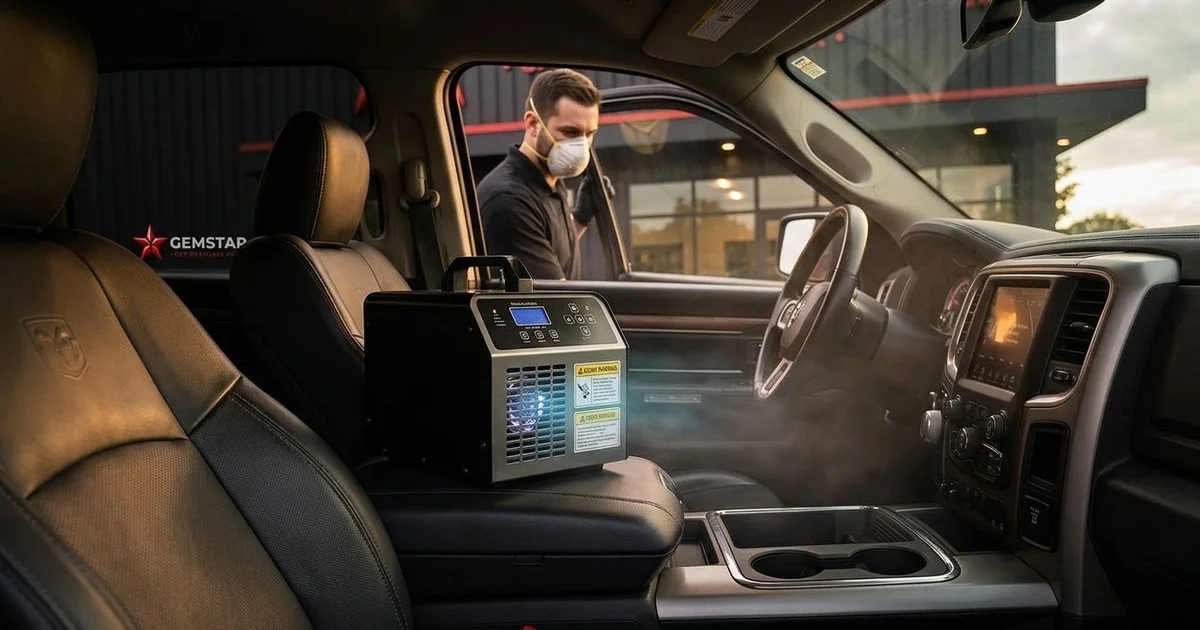
The final baseline phase involves a multi-hour ozone cycle inside the sealed cabin. Ozone gas actively oxidizes any remaining odor molecules. This gas penetrates hard-to-reach surfaces that traditional cleaning tools miss.
Step 4: Repeat for Severe Cases
Some vehicles demand a more aggressive approach. We repeat the extraction and ozone process for severe smoke contamination or multi-pet households. The cycle continues until the cabin air tests completely clean.
What ozone does
Ozone, scientifically known as O3, is an unstable gas that reacts with Volatile Organic Compounds at the molecular level. It literally destroys the odor-causing molecules rather than just covering them up.
This process requires a completely sealed environment and several hours of continuous exposure to be effective. The third oxygen atom in O3 detaches and binds to the biological residue. This chemical reaction alters the odor’s structure permanently.
Safety is a major factor during this phase. The Environmental Protection Agency and OSHA strictly regulate ozone exposure, limiting safe human contact to 0.1 parts per million over an eight-hour period. Because of these health standards, the cabin must thoroughly off-gas before the vehicle is safe to drive.
Our team monitors this ventilation period closely. Taking this precaution protects your lungs and ensures a clean, breathable result.
| Feature | Ozone (O3) Treatment | Standard Air Freshener |
|---|---|---|
| Action | Destroys molecules completely | Masks smells temporarily |
| Target | Volatile Organic Compounds | Human scent receptors |
| Safety | Requires a sealed, unoccupied cabin | Safe for general occupied use |
What ozone won’t do
Ozone is a powerful oxidizer, but it is not a magic solution for a filthy interior. It will not replace the need for physical source removal or fix heavily soiled fabric.
There are specific limitations to understand before booking a treatment. Professional detailers know exactly where ozone falls short.
- Replace source removal: Ozone cannot dissolve a physical spill or pull sticky tar out of the carpet. You must extract the dirt first.
- Remove permanent fabric staining: The gas neutralizes smells but leaves visual blemishes completely intact.
- Clean the HVAC system: If the A/C evaporator is the primary odor source, ozone alone will not help. The system needs a separate chemical flush.
- Protect interior plastics: Leaving an ozone machine running for days can actually bleach interior rubber and degrade wiring coatings.
Pricing
Professional odor removal pricing scales based on the severity of the contamination and the specific treatments required. Standard ozone treatments start as a $75 add-on to a regular detailing package.
This minor investment makes perfect sense when you consider the potential 30 percent loss in resale value caused by a foul-smelling cabin. Taking action now protects your vehicle’s long-term worth.
- Standard ozone treatment: This is a $75 add-on service. It works well for mild odors after a basic cleaning.
- Multi-cycle ozone (severe smoke): These cases are strictly quote-based. The price varies depending on the square footage and contamination level.
- Comprehensive interior restoration: Source cleaning is included in our interior detailing Restoration tier for $299. This covers the high-heat steam extraction and basic stain removal.
Severe cases
Vehicles that have been heavily smoked in for years require a massive overhaul to fully reset. These extreme scenarios sometimes need a total cabin filter replacement, a dedicated headliner shampoo, and two to three separate ozone cycles.
We carefully assess the vehicle’s condition and provide a detailed quote upon inspection. Treating extreme contamination usually involves replacing porous materials that trap smells.
Typical hardware upgrades include:
- HEPA Cabin Air Filters: Upgrading to a premium filter, like those from Bosch or Fram, prevents old smells from blowing back into the cabin.
- Headliner Fabric: Technicians must gently hand-shampoo this glued fabric, as it absorbs a massive percentage of ambient smoke.
- Seat Track Assemblies: We thoroughly degrease the metal tracks where old food and liquid spills harden over time.
If your car needs a complete reset to permanently eliminate car odor, See interior detailing to review our complete list of restoration services.