You know how frustrating it is to clean a vehicle interior, only to watch those same stains magically reappear a few days later.
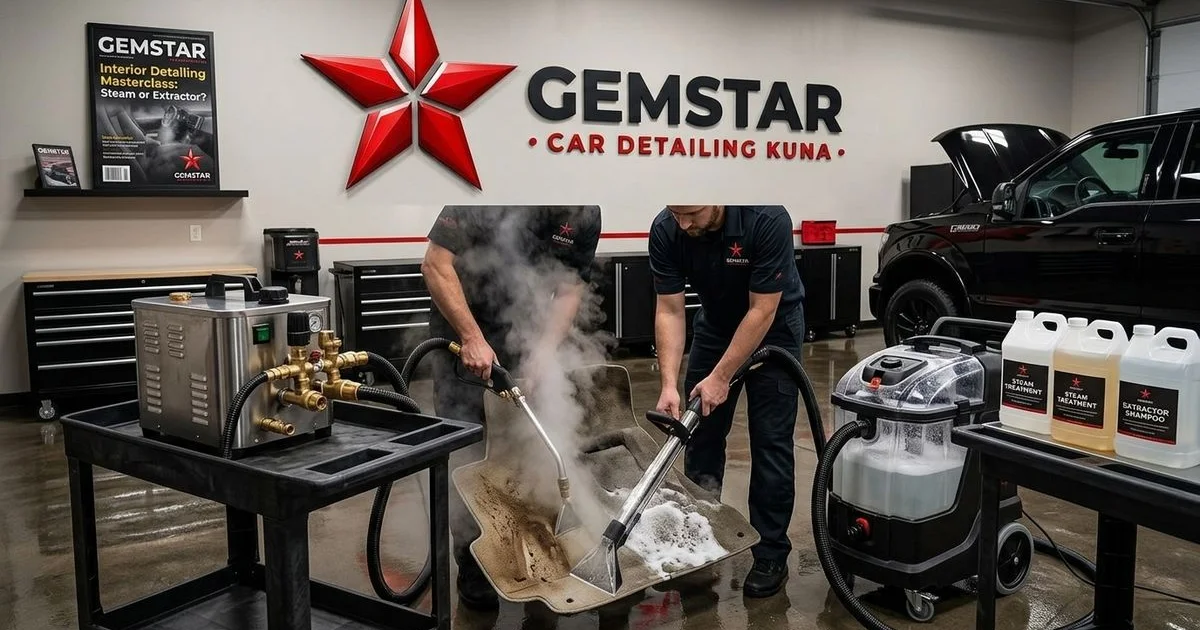
When comparing steam cleaning vs shampoo extraction, the issue almost always comes down to using the wrong tool for the job. Steam cleaning and hot-water shampoo extraction are two completely different methods designed for distinct types of grime.
We find that most professional details actually require a combination of both to achieve a true deep clean. Let’s look at the data behind these machines, explore how they actually work, and outline exactly when you should use each approach for your personal vehicles or commercial fleet.
Steam cleaning
Steam cleaning is a low-moisture, high-temperature process that melts away surface grime and sanitizes without soaking the material. This method relies on dry vapor to break down dirt so you can easily wipe it away with a microfiber towel.
We use commercial units like the US STEAM Falcon Plus because it hits temperatures over 300 degrees Fahrenheit, which instantly kills bacteria and dust mites. The intense heat loosens sticky cup holder spills and steering wheel oils in seconds. This approach is highly effective on hard surfaces like your dashboard, air vents, and center console.
These machines use up to 95 percent less water than traditional washing methods. This massive water reduction makes vapor technology incredibly safe for modern interiors.
Core Features of Professional Steam
- Extreme Heat: Operates at 300 to 350 degrees Fahrenheit.
- Sanitization Power: Naturally eliminates germs without harsh chemicals.
- Low Moisture: Softens dirt without leaving puddles behind.
- Surface Focus: Perfect for hard plastics, leather, and tight crevices.
Shampoo extraction
Shampoo extraction is an aggressive deep-cleaning process that injects hot, soapy water into fabrics and immediately vacuums it back out. This method literally pulls embedded dirt, grease, and pet accidents from deep within carpet fibers and seat cushions.
Our teams rely on heated extractors that push 200-degree Fahrenheit water at 50 to 100 PSI directly into the material. The combination of heat and specialized detergent breaks down severe contamination much faster than cold water ever could. It is the absolute best choice for restoring floor mats and heavily soiled fabric seats.
This process saturates the surface, which naturally leads to a longer drying time. Professional machines use powerful vacuum motors to minimize this moisture, but the material will still feel slightly damp to the touch.
How Extraction Differs from Steam
- Penetration: Flushes completely through the fabric pile.
- Removal: Physically sucks the dirty liquid out of the car.
- Aggression: Tackles heavy, ground-in mud and organic stains.
- Detergent Use: Relies on cleaning agents to lift stubborn soils.
When steam wins
Steam is the clear winner for hard-surface cleaning, delicate materials, and any area where excess moisture could cause expensive damage. You should choose this method when you need to sanitize high-touch areas or do a quick maintenance wipe-down.
We always reach for vapor when cleaning around sensitive electronics, infotainment screens, and dashboard instrument clusters. A blast of dry vapor safely cleans these components without risking a short circuit. It is also the only safe way to clean a fabric headliner.
Headliners are held up by delicate glues that will instantly fail and sag if they get completely wet. Using a 300-degree vapor pulse cleans the fabric while keeping that adhesive perfectly intact.
| Cleaning Goal | Why Steam Wins Here |
|---|---|
| Air Vents & Crevices | Vapor blows out trapped dust where hands cannot reach. |
| Leather Seats | Opens pores to release body oils without soaking the foam underneath. |
| Infotainment Screens | Cleans fingerprints gently with virtually zero water residue. |
| Headliners | Removes smoke odors without dissolving the roof glue. |
When shampoo extraction wins
Shampoo extraction takes the prize when dealing with heavily soiled carpets, fabric seats, and stubborn, set-in stains. This is the only reliable way to physically remove spilled coffee, winter salt rings, or layers of ground-in dirt.
Our technicians prefer this method for severe contamination because it flushes the debris completely out of the vehicle. Pushing 100 PSI of hot water into a carpet fiber forces the hidden grit up to the surface. The vacuum then immediately recovers that dirty water into a separate waste tank.
This technique is also critical for removing prior over-shampooing residue. If a vehicle owner previously used too much soapy spot cleaner, that sticky residue will constantly attract new dirt until it is fully extracted.
Top Targets for Extraction
- Embedded Carpet Stains: Flushes out thick mud and winter salt.
- Fabric Seats: Pulls old sweat and spilled drinks out of the foam cushion.
- Bio-Hazards: Safely removes pet accidents and food spills.
- Chemical Residue: Rinses away sticky foams left by cheap interior sprays.
When you need both
A truly comprehensive detail requires both methods working in harmony to address every single surface type in the cabin. Most full interior details combine steam for the hard surfaces and detail work, while relying on shampoo extraction for the carpet and fabric seats.
We start by using vapor to blow dust out of crevices and melt steering wheel grease. The team then switches to the heavy-duty extractor to pull the deep stains out of the floorboards. Our Interior Detailing Deep Clean and Restoration tiers include both processes to guarantee a factory-fresh result.
Using these tools together creates a massive difference in the final product. The vapor sanitizes the touchpoints, and the extractor handles the heavy lifting on the floors.
| Tool | Ideal Operating Specs | Primary Target Area |
|---|---|---|
| Professional Steam Cleaner | 300°F+ Temp, 50-70 PSI | Plastics, Leather, Vents, Headliners |
| Hot-Water Extractor | 200°F Temp, 100+ Inches Water Lift | Carpets, Floor Mats, Cloth Seats |
DIY caveats for steam cleaning vs shampoo extraction
The biggest trap for DIYers is relying on underpowered consumer machines that simply cannot match professional specifications. Consumer steam cleaners often max out around 200 degrees Fahrenheit, making them far less effective than the 350-degree machines the pros use.
Our shop constantly fixes interiors that were ruined by cheap consumer carpet shampooers. Those store-bought units severely under-extract the moisture because they lack heavy-duty vacuum motors. A high-end machine like a Mytee extractor has over 130 inches of water lift suction power, which leaves carpets nearly dry.
Common DIY Mistakes to Avoid
- Cold Steam: Pushing 200-degree water around without sanitizing anything.
- Over-Saturation: Flooding seat cushions with weak extraction tools.
- Soap Build-Up: Leaving sticky detergent behind that immediately attracts new dirt.
Consumer units leave the seat cushions soaking wet and full of detergent residue. That leftover soap acts like a magnet, causing the fabric to look filthy again in just a few weeks.
If you are still debating steam cleaning vs shampoo extraction for your own vehicle, the easiest choice is to let the experts handle the heavy equipment. See interior detailing tiers to book your deep clean today.