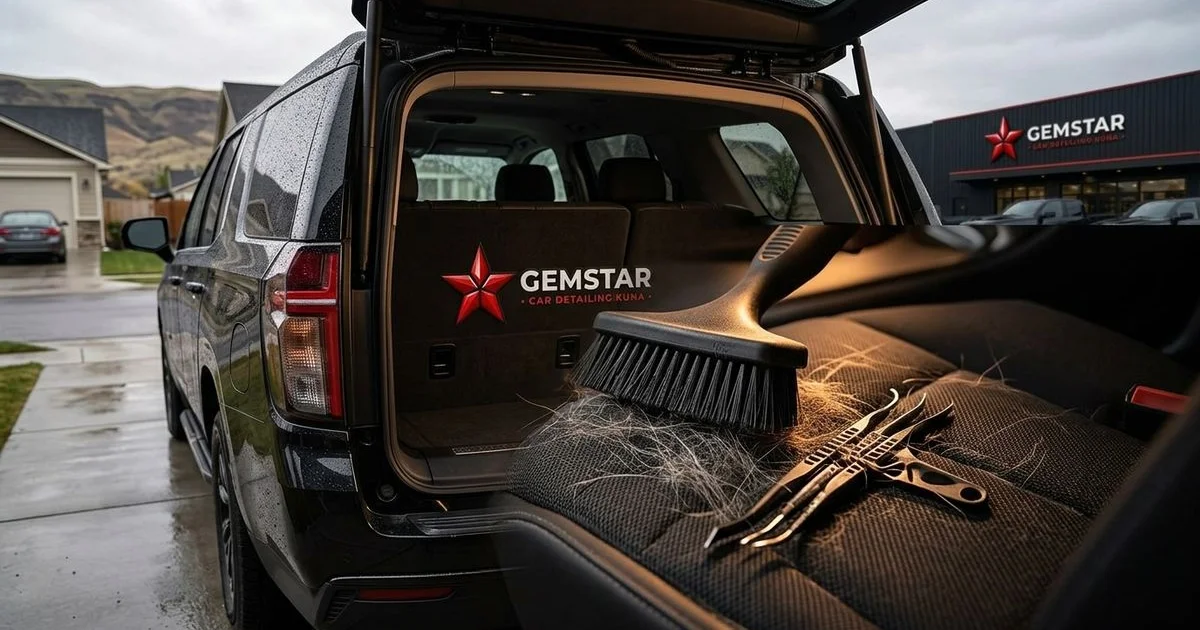
We see daily how frustrating embedded pet hair is for dog and cat owners. Standard shop vacuums simply lack the friction required to pull fur out of modern auto upholstery.
Our team has spent countless hours testing different methods to break the static bond between dog fur and synthetic car seats.
The electrostatic charge literally glues the positive ions of the hair to the negative ions of the fabric. We put together this guide to show you the exact tools and techniques to remove embedded pet hair from your car permanently.
Why vacuum doesn’t catch it
Vacuums rely on suction, but embedded pet hair requires physical friction to break free from the fabric. We constantly explain to clients that suction alone cannot overcome the mechanical bonds holding the fur in place.
US automotive manufacturers design standard nylon car seats to grip tightly for passenger comfort. Our detailed inspections reveal three main reasons why a standard hose leaves so much fur behind.
- Mechanical locking: The tiny barbs on pet hair weave themselves into the tight fabric loops of your seats.
- The static cling effect: Pet hair carries a positive static charge while car seats carry a negative charge, creating a magnetic bond.
- Depth penetration: Constant friction from sitting presses the fur deep below the effective suction range of a vacuum head.
Tools that work
The most effective tools for pulling fur out of carpet rely on rubber friction or mild abrasion rather than suction. We rely on a specific set of specialized brushes and stones to lift hair to the surface.
Standard household attachments usually just push the mess around without grabbing the embedded fibers. Our preferred loadout includes tools specifically designed for auto detailing. Professional detailers across the US utilize these exact items to speed up the cleaning process.
| Tool Type | Specific Model Example | Best Used For | Pro Tip / Warning |
|---|---|---|---|
| Rubber Detailer | Lilly Brush Mini | Cloth seats and corners | The flexible blade handles tight spaces beautifully. |
| Edge Brush | Analan Mini Pet Hair Remover | Large flat sections | Uses a triangular design with three different gear edges. |
| Pumice Stone | Fur-Zoff or Speedy Stone | Deeply embedded carpet fibers | Keep away from plastic and leather to prevent severe scratching. |
| Vacuum Attachment | Fur-Eel | Final extraction passes | Fits over standard crevice tools to add rubber friction. |
Process
Our standard procedure combines static-reducing chemicals with intense mechanical agitation. This multi-step approach ensures even the most stubborn fur lifts out of the fabric.
We follow a strict six-step method to tackle the worst interior carpets. Proper preparation makes the actual extraction phase significantly faster.
Phase 1: Preparation and Chemical Treatment
We always start by inspecting the interior to map out the heaviest concentration zones like the rear bench and cargo area. A simple chemical trick saves a massive amount of manual labor.
Our technicians spray a light mist of fabric softener diluted with water across the seats. The mixture requires a ratio of one part softener to three parts water to safely neutralize the static charge.
Phase 2: Mechanical Agitation
We grab our rubber brushes once the static bond is broken. Short rapid strokes with an Analan brush will quickly pull the fur out of the weave and clump it together on the surface.
Our team switches to a pumice stone for the deeply embedded floor mats. Raking the stone across the thick carpet pulls out the strands that rubber tools miss.
Phase 3: Final Extraction
We utilize steam cleaning to relax the tight upholstery fibers and release the final stubborn hairs. The high heat opens the fabric weave beautifully.
Our final pass involves a hot-water extractor to flush out dirt, dander, and remaining chemical residue. This deep cleaning step leaves the car interior smelling fresh and looking entirely renewed.
Severity-based pricing
Professional detailing shops typically treat dog hair as an add-on service, with the 2026 US average cost ranging from $40 to $150. We charge between $25 and $75 specifically for this add-on depending on the exact severity of the vehicle.
A single short-haired dog that rides occasionally requires minimal extra labor. Our higher tier pricing applies to multi-pet households or vehicles that have gone months without a vacuum. Fair pricing always reflects the actual time required to restore the fabric.
| Condition Level | Typical Scenario | Estimated Surcharge |
|---|---|---|
| Light | Single pet and regular monthly cleaning | $25 to $40 |
| Moderate | Heavy shedder and cleaned every few months | $40 to $60 |
| Severe | Multiple pets and extended neglect | $60 to $75+ |
DIY tips that help
You can achieve excellent results at home using inexpensive items like nitrile rubber gloves and window squeegees. We highly recommend keeping these basic tools in your trunk for quick touch-ups after a trip to the dog park.
A slightly damp microfiber cloth paired with a standard medical glove creates massive friction. Our favorite hack involves using an inflated balloon to pull loose hairs off cloth seats using pure static electricity.
- The Nitrile Glove Hack: Put on a standard rubber glove and rub your hand across the seat to create a static charge that clumps the hair together.
- Squeegee Flat Areas: A basic window squeegee works incredibly well for pulling fur off large, flat cargo carpets.
- Diluted Fabric Softener: Mix a three-to-one ratio of water to liquid fabric softener in a spray bottle to break static bonds before wiping.
- Avoid Sticky Rollers: Standard lint rollers waste money in cars because they only pick up the loose top layer and ignore the embedded barbs.
What we won’t promise
We cannot guarantee total removal on heavily damaged headliners where the fur has permanently fused with the delicate adhesive backing. Certain materials simply cannot handle the aggressive friction required to remove severe tangles.
Severe overhead tangles often demand full headliner replacement, as the fabric backing is too fragile for heavy pumice stones or rubber edge tools.
Our initial inspection will immediately identify if a roof liner is at risk. Extreme neglect sometimes forces total headliner replacement. We always discuss these limitations upfront before starting the extraction process.
You can easily remove embedded pet hair from your car if you use the right friction tools, but professional extraction is always available if you get stuck. See interior detailing tiers to review our complete service packages online and book your next appointment.