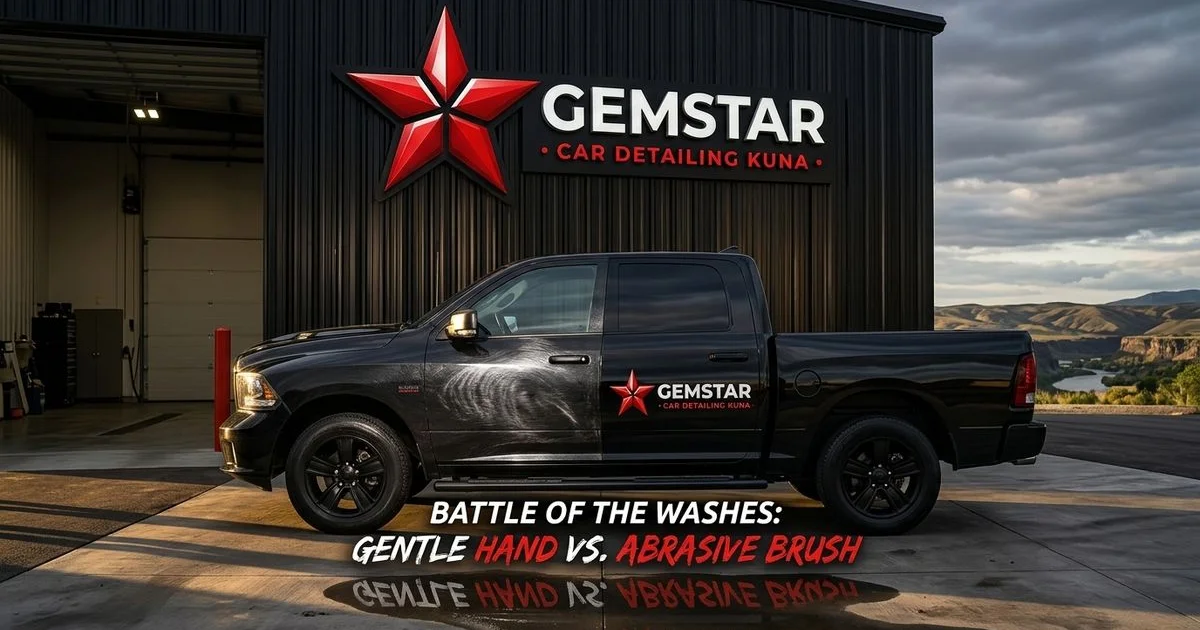
We notice a common trend when inspecting vehicles in our shop. The debate between a hand wash vs automatic car wash is one every vehicle owner faces, but convenience often comes at a steep price.
Our team spends countless hours reversing the damage caused by friction-based washing systems. These automated setups are responsible for most of the swirl marks we see during routine paint correction.
We will break down the real impact of different washing methods.
Let’s look at the data to help you protect your investment.
Hand wash (gold standard)
We consider traditional hand washing to be the absolute gold standard for exterior care.
The process requires specific tools to prevent cross-contamination. Industry experts agree that 90 percent of paint finish issues result from improper washing techniques.
Our technicians utilize the proven two-bucket method equipped with specialized dirt traps called grit guards. One bucket holds clean soapy water, while the second serves as a dedicated rinse station.
We rely on high-quality microfiber wash mitts instead of traditional sponges to protect your vehicle. A standard sponge will trap dirt directly against the clear coat and cause immediate scratching.
Our top recommendation is using a pH-neutral car shampoo like Meguiar’s Gold Class to maintain your finish. Harsh detergents will quickly strip away protective waxes and dry out exterior plastic trim.
We always dry the vehicle with plush microfiber towels to prevent water spots. The final result is a pristine surface with minimal new swirl marks.
Essential Hand Wash Tools
- Two-bucket method: Requires grit guards to trap dirt at the bottom.
- pH-neutral car shampoo: Protects existing sealants and prevents clear coat degradation.
- Microfiber wash mitt: Lifts contaminants away from the paint surface safely.
- Microfiber drying towels: Absorbs water quickly without dragging harsh fibers across the finish.
Automatic brush wash (worst option)
We actively warn clients about the hidden dangers of drive-through brush washes. Mechanical brush rotation against your paint creates aggressive friction that permanently damages the clear coat.
Automotive detailing studies show that regular use of automatic car washes can reduce a vehicle’s paint gloss by up to 25 percent over a single year.
Our team constantly repairs the spiderweb-like scratches caused by these rotating machines. The problem stems from the brushes carrying abrasive grit from hundreds of previous vehicles.
We want you to understand exactly how these systems operate behind the scenes. Commercial locations utilize highly aggressive cleaning detergents to break down road grime quickly.
Research from PPG Industries indicates that constant exposure to these harsh chemicals reduces clear coat thickness by up to 5 percent annually.
Our clients often notice visible swirl marks within just 6 to 12 months of regular use.
The Hidden Costs of Friction Washes
- Abrasive Contamination: Spinning brushes act like sandpaper when loaded with dirt from other cars.
- Chemical Degradation: Industrial-grade soaps eat through expensive waxes and sealants.
- Loss of Vehicle Value: Automotive experts confirm well-maintained paint retains 10 to 15 percent more resale value.
Touchless wash (compromise)
We often field questions about the safety of touchless car wash facilities. These systems eliminate mechanical contact with your paint by relying entirely on high-pressure water and strong detergents.
This method successfully prevents the physical brush scratches that plague traditional automated tunnels.
Our experts view this option as a reasonable compromise for busy vehicle owners. Facility operators must compensate for the lack of scrubbing by using extremely potent chemicals.
We have seen these highly alkaline soaps completely strip away traditional carnauba wax in a single pass. Research from the University of Texas suggests that detergents used in touchless washes can be up to 30 times more concentrated than hand washing formulas.
Global data from 2025 shows that 52 percent of new wash machines feature water recycling systems.
Our main concern with recycled water is the high salt and mineral content left behind on your paint. These systems will not remove stubborn embedded contaminants like tree sap or baked-on brake dust.
Touchless Wash Results and Realities
- The Good: Leaves a visually clean surface with zero new friction-induced swirl marks.
- The Bad: Aggressive chemicals rapidly degrade protective sealants and dry out rubber seals.
- The Reality: High-pressure jets fail to eliminate bonded traffic film or embedded industrial fallout.
When touchless is acceptable
We recognize that professional hand washing is not always a realistic option. There are specific scenarios, like freezing winter weather, where utilizing a touchless system makes practical sense.
Our service advisors actually recommend them when winter temperatures drop below 32 degrees Fahrenheit. Washing a vehicle by hand in freezing conditions is miserable and can cause door jambs to freeze shut.
We also suggest hitting a touchless bay for a quick rinse after heavy dust events. This removes loose surface debris between your comprehensive full washes.
Long road trips and unpredictable travel situations present another valid excuse for a quick automated spray.
Our preferred strategy is to use them strictly as maintenance washes between your scheduled professional details.
Safe Touchless Scenarios
- Freezing weather: Protects your undercarriage from winter road salts when hand washing is impossible.
- Heavy dust exposure: Rinses away loose particles before they can bond to the clear coat.
- Cross-country travel: Removes fresh bug splatters quickly before they etch into the paint.
- Interim maintenance: Bridges the gap between your comprehensive detailing appointments.
When automatic brush is never acceptable
We draw a very hard line regarding friction-based automatic washes. You should absolutely avoid these tunnels on any vehicle you intend to keep long-term.
The cumulative damage simply destroys your exterior finish over a few short years.
Our team strongly advises against brush washes immediately after a professional paint correction or a fresh ceramic coating. Automated brushes can ruin thousands of dollars worth of professional detailing work in five minutes.
We urge extra precaution for dark colored vehicles because black and navy blue paint broadcasts every single micro-scratch. A dark hood covered in automated wash swirls looks terribly dull under direct sunlight.
Our policy is to educate clients so they never subject their pristine cars to this type of abuse.
“The convenience of a three-minute brush wash will cost you hundreds of dollars in lost resale value and professional correction fees.”
Cost comparison
We consistently monitor national pricing trends for both a hand wash vs automatic car wash to help you budget for proper vehicle maintenance. A basic automatic wash averages 10 to 25 dollars, while a professional hand wash runs between 60 and 150 dollars.
Grand View Research valued the US car wash services market at over 15 billion dollars in 2025, showing just how popular these convenient tunnels have become.
Our internal tracking shows touchless options falling into a similar 8 to 20 dollar range. A DIY hand wash offers the best value, costing roughly 1 to 5 dollars in basic water and soap supplies.
We highly recommend investing in professional care for long-term preservation. Hiring a mobile detailing service provides a level of safety and thoroughness that machines simply cannot match.
Our commercial packages scale up depending on the specific size and condition of the vehicle.
2026 Average Car Wash Pricing
| Wash Method | Average Cost Per Visit | Risk to Vehicle Paint |
|---|---|---|
| DIY Hand Wash | $1 - $5 | Very Low |
| Touchless Wash | $8 - $20 | Low to Medium |
| Automatic Brush Wash | $10 - $25 | Extremely High |
| Professional Hand Wash | $60 - $150+ | Very Low |
What we recommend for Kuna drivers
We developed a specific maintenance schedule designed for local Kuna drivers. Daily driven vehicles need a weekly DIY hand wash paired with a quarterly professional service to stay protected.
Road conditions, seasonal weather changes, and agricultural dust all dictate how often you should clean your exterior.
Our technicians can easily remove the bonded traffic film that regular washing leaves behind.
Routine automatic washes will only seal that dirt under cheap spray waxes.
We recommend a slightly different routine for garage-kept keepers or coated vehicles. These protected cars thrive on a bi-weekly DIY hand wash alongside a semi-annual professional detail.
Show vehicles require the utmost care and must remain strictly hand wash only with zero exceptions.
Our final piece of advice is to view washing as preventative maintenance rather than just a cosmetic chore.
Choosing a hand wash vs automatic car wash directly determines how long your vehicle will retain its value.
Please See exterior detailing to book your next professional service.