We see a lot of botched detailing jobs, but none quite as heartbreaking as ruined clear coat. Understanding exactly what is paint correction will save you from making expensive mistakes. This service is the most technically demanding process in the detailing industry, and unfortunately, the most commonly done badly.
Our professional service team uses this guide to explain the exact mechanics of leveling a factory finish safely. You will learn what imperfections can actually be erased and when a panel is simply too far gone. Let’s look at the hard data, what it’s actually telling us, and explore a few practical ways to protect your vehicle’s value.
We always recommend reading up on the process before handing over your keys.
What it is
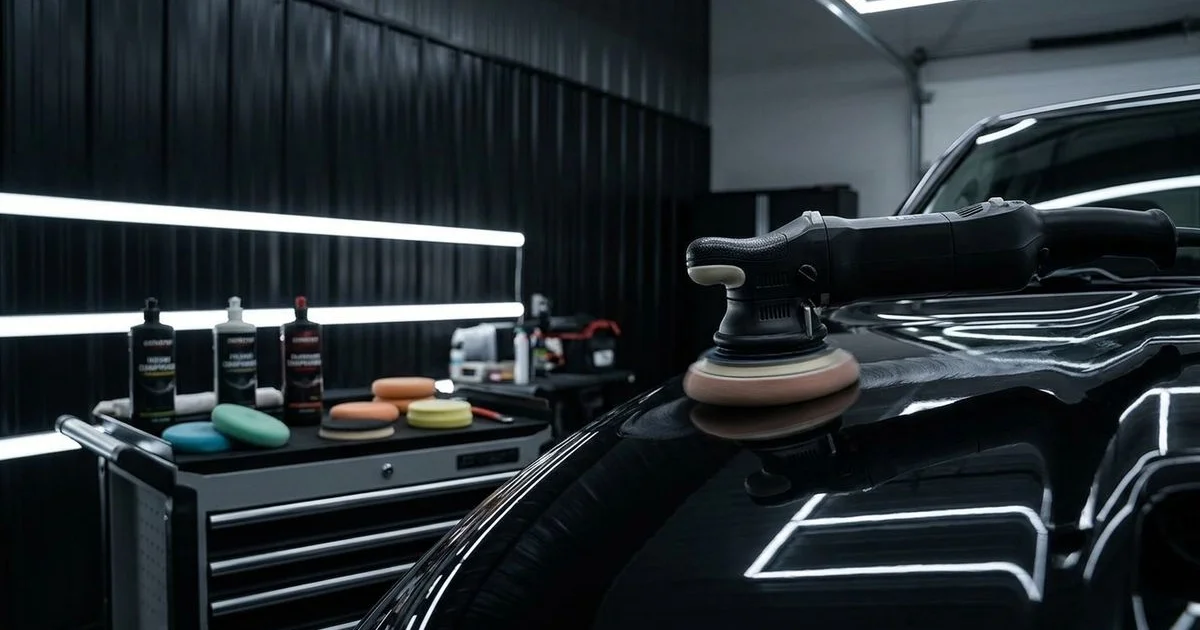
To answer what is paint correction, it is the controlled removal of microscopic clear coat to eliminate defects using progressively finer pads and polishing compounds. This process levels the uneven surface until light reflects perfectly straight back at your eye. Our technicians rely on high-end Dual Action (DA) polishers, like the Griot’s Garage G9 or Rupes Bigfoot, to do the heavy lifting safely.
These machines pair perfectly with specific cutting materials to refine the finish. For example, combining a Meguiar’s microfiber pad with an aggressive compound like M105 physically shaves down the damage. We then follow up with a softer foam pad to restore the absolute highest gloss possible.
What defects it removes
Proper cutting methods can permanently erase surface-level damage that dulls your car’s shine. You can expect a massive improvement in clarity once the right combination of pads and polishes does its job. Our shop frequently tackles these specific paint imperfections:
- Swirl marks: Fine circular scratches typically caused by dirty wash mitts or automated car washes.
- Buffer trails: Haze patterns left behind from high-speed rotary work done wrong.
- Light scratches (RIDS): Random isolated deeper scratches that have not pierced the base coat.
- Type 3 Water spotting: Hard mineral deposits from rain or sprinklers that have etched deeply into the clear coat.
- Oxidation: UV-degraded clear coat that creates a milky, faded appearance.
- Holograms: Visible, ghost-like polishing patterns from improper finishing techniques.
This extensive list covers about 80% of the surface issues that ruin a vehicle’s appearance. Surface-level defects are highly treatable with the right tools. We evaluate every car carefully before promising a perfect outcome.
What defects it can’t remove
Certain types of damage require a body shop instead of a polishing pad. Any defect that penetrates completely through the clear layer is permanent. Our rule of thumb relies on the simple “fingernail test.”
If your fingernail physically catches in the scratch groove, the defect is too deep to buff out safely. Attempting to polish these gouges out will only lead to catastrophic clear coat failure. We tell clients that the following issues fall strictly into touch-up or repaint territory:
- Deep scratches carving down into the colored base coat or bare metal primer.
- Rock chips from highway driving and debris.
- Dents, sharp creases, and physical collision damage.
- Total clear coat failure where the protective layer is peeling off in flakes.
Why measurement matters
Modern US factory clear coats average just 1.5 to 2 mils thick, which translates to roughly 38 to 50 microns. That measurement is less than the thickness of a standard sticky note. Our pre-inspection process always starts by taking readings with a digital Paint Thickness Gauge (PTG).
Taking off too much material is incredibly dangerous for the vehicle’s lifespan. One careless correction pass can instantly remove 5 to 10 microns, and three heavy passes could easily eat up two-thirds of your protective layer.
We know that automotive manufacturers pack the vital UV blockers into the top 25% of the clear coat. Breaching that top layer guarantees the paint will eventually fade and fail.
Panel edges require even more caution because factory paint is naturally thinner there. Our technicians see gauge readings on sharp edges dip 25% to 50% thinner than flat surfaces, sometimes down to just 0.9 mils. Taking constant measurements ensures a known thickness, a known removal rate, and a guaranteed safety margin.
No professional should ever put a spinning pad to a car without measuring the panels first.
Tier overview
We break the polishing process into three distinct stages based on severity and budget. Choosing the right package depends entirely on your vehicle’s current condition and your final gloss goals. Recent 2026 data shows that professional US detailing shops follow a predictable pricing structure for these services.
Our team mapped out the expected costs, time commitments, and results for each level.
| Correction Tier | Average US Cost (2026) | Defect Removal | Micron Removal | Best For |
|---|---|---|---|---|
| Single-Stage | $400 - $700 | 50% - 70% | ~1-3 microns | Light swirls and minor dullness. |
| Two-Stage | $700 - $1,200 | 70% - 90% | ~3-6 microns | Moderate scratches and oxidation. |
| Three-Stage | $1,200 - $2,500+ | 95%+ | ~5-10+ microns | Severe defects and show-quality finishes. |
These tiers give you a realistic idea of what to expect from a legitimate shop. A multi-stage correction involves switching from heavy cutting compounds to ultra-fine finishing polishes.
When you need it
We receive the most requests for this service right before applying a protective sealant. You absolutely must level the surface before installing a ceramic coating. Skipping this crucial prep step permanently locks in all those ugly swirls under a hard glass shell.
Our specialists also highly recommend a light polish if you are preparing to sell your car. A glossy, mirror-like finish maximizes your resale value and helps the vehicle sell faster.
Sometimes, you just want that rich showroom gloss back on a daily driver that looks a bit dull. We can help you determine the exact level of restoration required to meet your needs. Now that you understand the process, take a look at your options. See paint correction tiers to match a service to your goals and schedule your appointment today.